Earl Grey for Picard, English Breakfast for Patrick Stewart
Translated from the Romanian with AI. Written in Romanian, translated into English once by an AI model and not revised by the author. Where the two differ, the original counts: Earl Grey pentru Picard, English Breakfast pentru Patrick Stewart.
I am drinking an English Breakfast. The “replicator” in this pub near London does not have the recipe for “Earl Grey, hot!”, the one I would actually have liked to drink in memory of Patrick Stewart, who has left for another universe.
First published in Romanian on 31 October 2026 in Contributors.ro, a Romanian platform for essays and commentary written by academics, writers and other public voices.
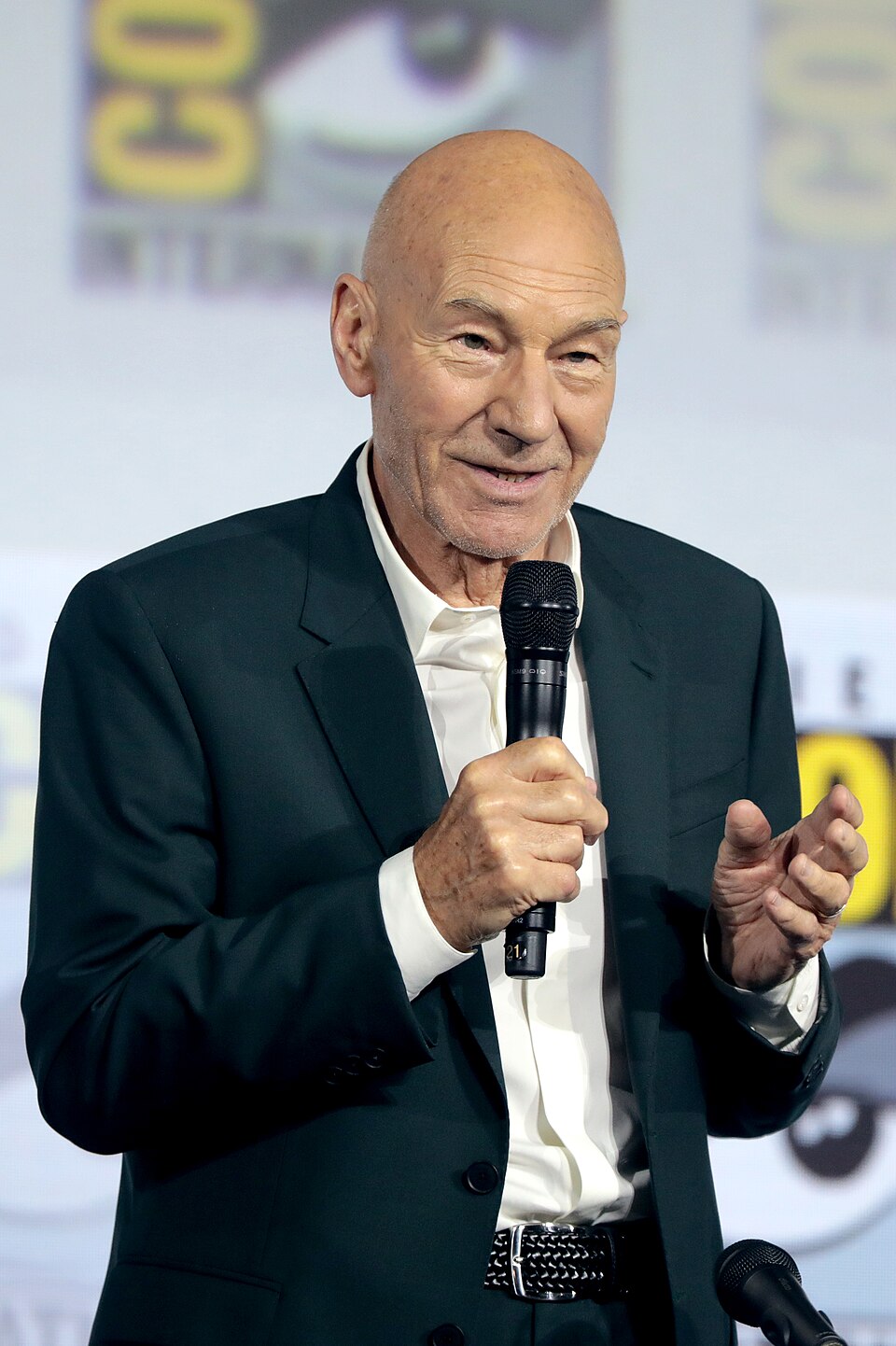

Patrick Stewart played Captain Jean-Luc Picard in Star Trek: The Next Generation (1987–1994), in four films and in Star Trek: Picard (2020–2023). Aboard the Enterprise, a replicator makes any food or drink on request, and Picard nearly always asks it for the same hot Earl Grey.
In a way it is better that chance kept the Earl Grey from me, because that tea does not celebrate Patrick Stewart but Jean-Luc Picard, who, although he never existed, will not disappear from this world, unlike the man who portrayed him. Picard did not die; Stewart did. That is why English Breakfast is a far more fitting tea for celebrating the life that has ended: the life of a man I never knew, but who had the great merit of doing his job very well, together with the luck of playing a universally loved character, in a series that motivated and changed generations.
He did not write the scripts, he did not imagine the universe, nor did he work out the philosophy of Star Trek. But through his charisma, perseverance and talent, through the work on set and the decades of work before it, he contributed enormously to creating a reference point that, beyond the artistic one, is above all moral, ethical. Because yes, scientists and engineers turn wishes and needs into technology, but that technology is not neutral: it carries the values of those who conceived it built into its very material. And this technology of ours changes our lives significantly.
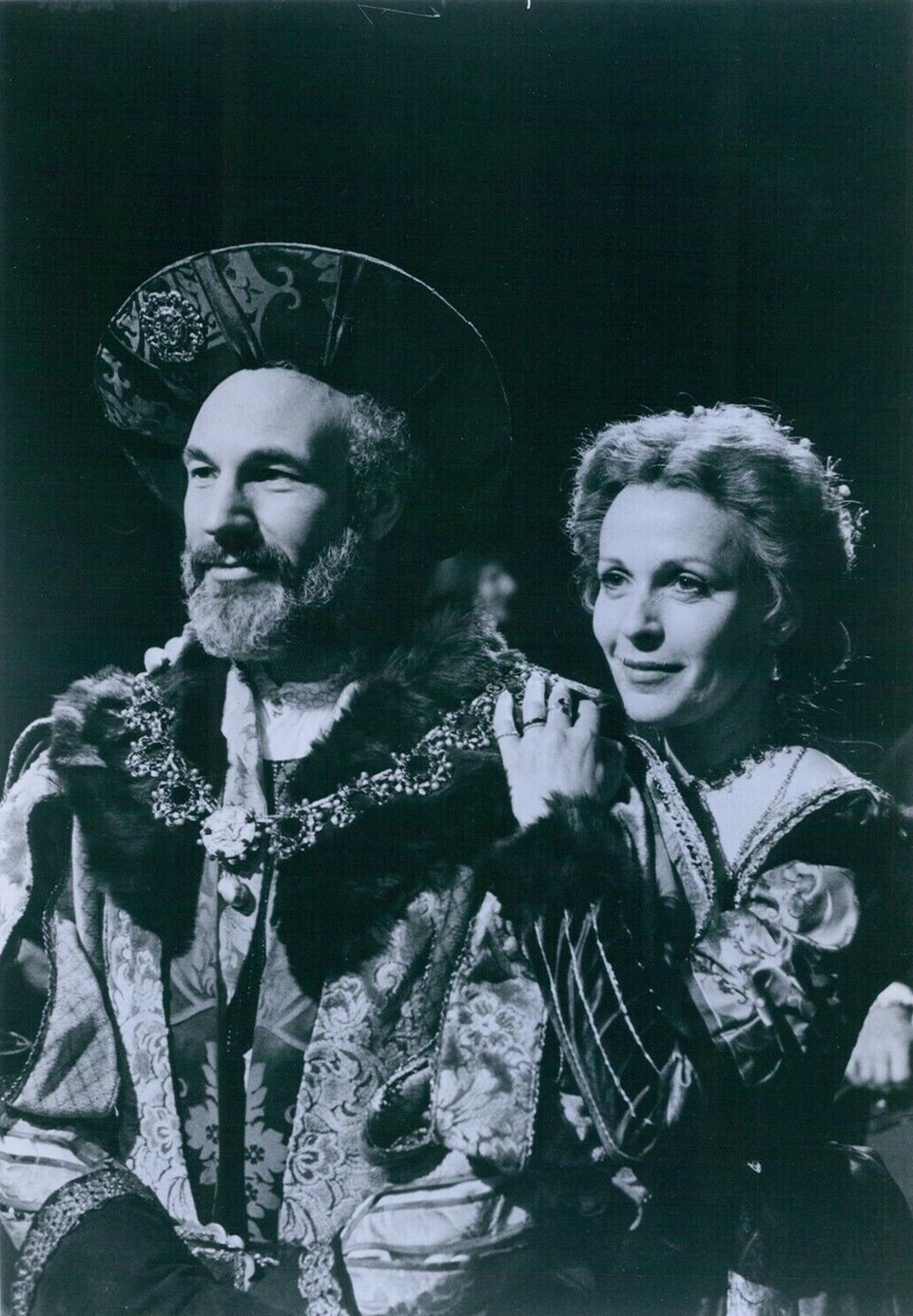

Before Star Trek, Stewart spent decades as a classical stage actor, many of them with the Royal Shakespeare Company.
And Patrick Stewart helped some good values become normal. Values we still take for granted: the dignity of life, cooperation, tolerance, curiosity, exploration in peace – not for conquest and subjugation – freedom, equality, diplomacy rather than force, non-interference.
Non-interference is Star Trek’s Prime Directive: Starfleet must not meddle in the internal development of other civilisations.
Watching the series again, I find the humanist values of Stewart’s character consistent and coherent with those I drank in greedily as a child reading Toate pânzele sus!: that “Make it so!” of Tudoran’s, and of my childhood. Star Trek could easily have been rewritten as a sea adventure in which a ship led by worthy people goes from port to port solving problems, putting its heroes’ virtues and principles to the test. But what makes the science-fiction dimension essential to Star Trek is that it lets the series explore, credibly, a problem I think humanity will face (if it survives) before it is ready: what do you do when abundance is general, universal? What can still motivate you, what still makes you happy, when everything you need is a thought or a word away?
Toate pânzele sus! (All Sails Up!) is Radu Tudoran’s 1954 adventure novel, a Romanian childhood classic, in which Captain Anton Lupan sails the schooner Speranța from the mouth of the Danube to Tierra del Fuego. A 1977 television series made it even better known. “Make it so” is Picard’s order once a decision has been taken.
The thought that we will build a post-scarcity society too soon frightens me. Like death – which, being so final and inevitable, makes lives better and gives the world the chance to renew itself at the macro level – scarcity motivates us; it gives us a purpose.
Abundance, for someone unprepared, is potentially fatal, because it can destroy even the will to live.
And the world I associate with Patrick Stewart offers me a solution: when you have everything you want materially, and money consequently becomes so useless that it no longer even exists, a limited resource – limited because you have to work enormously hard for it – becomes the new currency: reputation.
In the film Star Trek: First Contact (1996), Picard explains to a visitor from the twenty-first century that money no longer exists in his time: people work to better themselves and the rest of humanity.
Even without ever having met him, Stewart had an influence on me, through that character and that world. At first they enchanted me with their technology; now they give me a possible model of a human future, in which the real stake is not that technology will become advanced enough for people, but that people will become advanced enough, mature enough, for their technology.
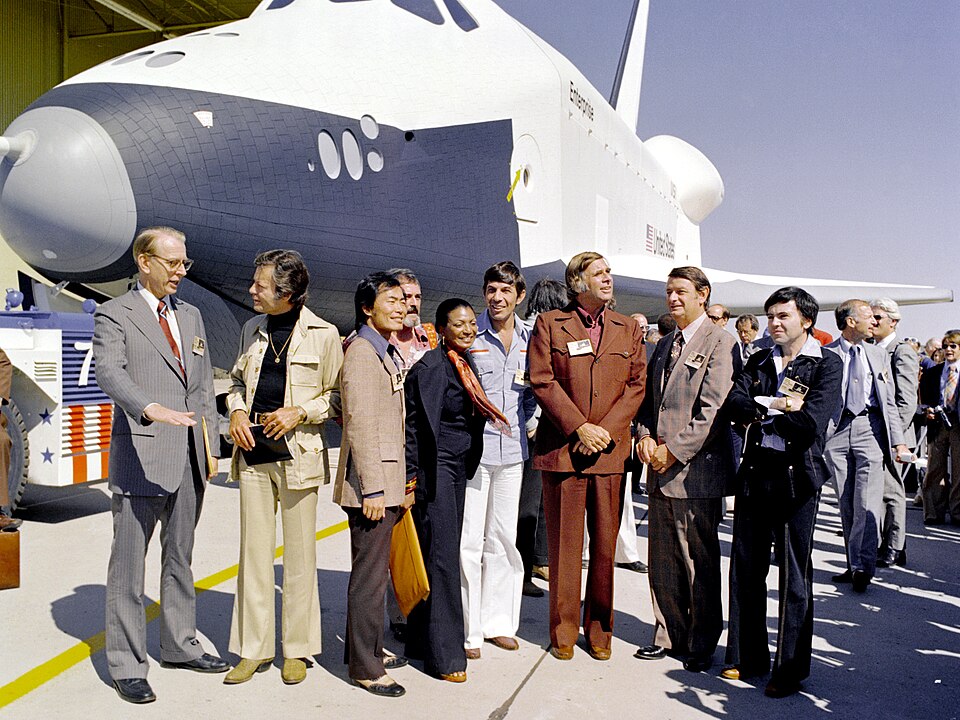

The influence also runs the other way. After a letter-writing campaign by fans, NASA named its first shuttle orbiter after the starship.
Mature enough to think of the man and not of Stewart’s character, even if, instead of an English Breakfast, a replicator offered them an “Earl Grey, hot!”.